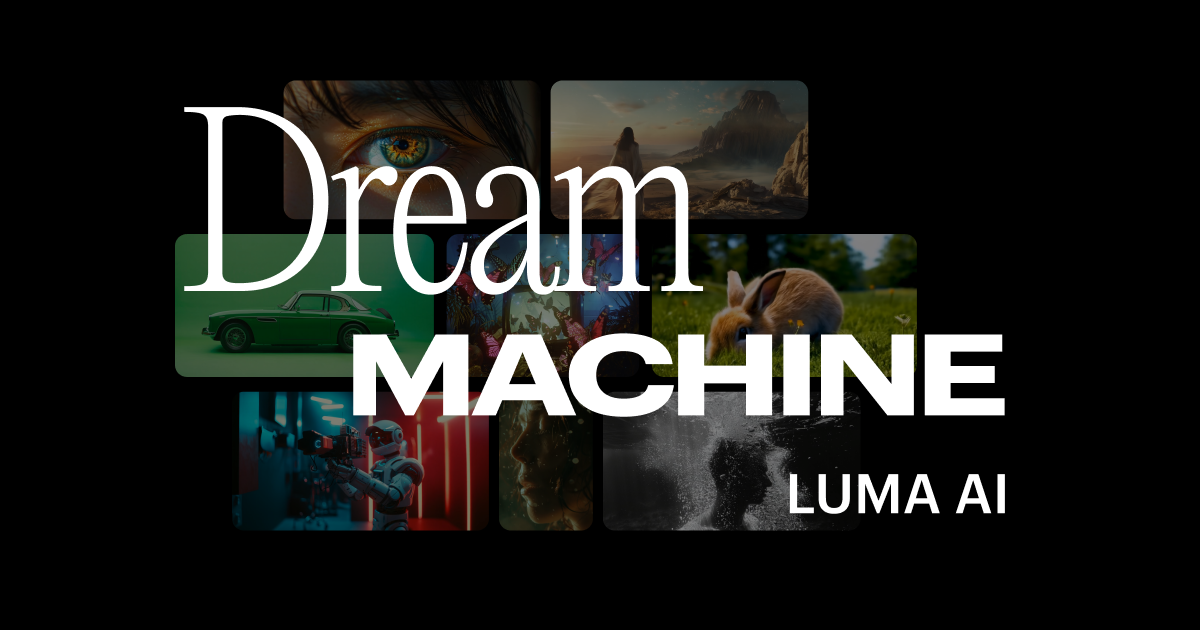
Can a text prompt really produce a polished video clip in seconds? Luma AI Dream Machine, launched by San Francisco-based Luma Labs in June 2024, does exactly that — generating short video sequences from written descriptions using a transformer-based diffusion model.
Common Misconceptions About AI Video Generation Tools
One widespread belief is that AI-generated video is indistinguishable from real footage. In practice, outputs from platforms like Luma AI Dream Machine often exhibit subtle artifacts — unnatural motion blur, inconsistent lighting, or morphing textures — that trained viewers can spot. Another misconception is that these tools replace human filmmakers entirely. They do not. Most professional studios treat them as pre-visualization aids or rapid prototyping tools rather than final production solutions. Public records covering this story are gathered in Luma Dream Machine | AI Video Generator
Some users also assume that AI video generators require powerful local hardware. Luma Labs runs its inference on cloud-based GPUs, meaning a standard web browser is sufficient. The company has stated that its model was trained on publicly available and licensed data, countering the assumption that all generative AI relies solely on scraped copyrighted material.
What Luma AI Dream Machine Offers Right Now
As of early 2025, Luma AI Dream Machine operates on a freemium model. Free-tier users can generate a limited number of clips per month, each lasting roughly five seconds at 720p resolution. Paid plans — branded as “Plus” and “Unlift” — unlock higher resolution output, longer generation queues, and commercial usage rights.
The platform supports text-to-video and image-to-video workflows. Users can upload a reference image alongside a text prompt to guide motion and composition. Luma Labs has also introduced a “Storyboard” feature that lets creators chain multiple prompts into a sequence, though coherence between segments remains inconsistent.
Output formats include MP4 and GIF, with frame rates around 24 fps. The company has not disclosed the exact parameter count of its underlying model but has described it as a “large-scale video diffusion transformer” trained on millions of video clips.
How Luma Labs Built and Positioned Dream Machine
Luma Labs was founded by Alex Wang and Amit Patel, both former computer vision researchers. Wang previously worked at autonomous driving startup Zoox before co-founding the company. The startup raised a $43 million Series B round in April 2024, led by Andreessen Horowitz, to scale its infrastructure.
The tool competes directly with OpenAI’s Sora, Runway’s Gen-3, and Kling by Kuaishou Technology. Luma Labs differentiates itself through a lower barrier to entry — no waitlist was required at launch, unlike Sora’s initially restricted access.
The model architecture draws on research published in academic papers on latent diffusion models adapted for temporal data.
Who Is Using Luma AI Dream Machine and Where
Adoption has been strongest among independent content creators, social media marketers, and small advertising agencies. In North America and Western Europe, agencies have used the tool for rapid concept pitches — generating mood boards in motion rather than static slides. In Southeast Asia, small e-commerce sellers have experimented with AI-generated product demos to reduce production costs.
Film schools in the United States and United Kingdom have begun incorporating Dream Machine into coursework on digital storytelling, treating it as a tool for teaching visual narrative rather than a replacement for cinematography training. Meanwhile, some newsrooms have tested the platform for illustrating explainer segments, though most editorial policies prohibit AI-generated imagery in hard-news contexts due to authenticity concerns.
Reception in professional VFX communities has been mixed. Artists appreciate the speed for rough animatics but note that the output lacks the fine control required for broadcast-quality work. Online forums show active communities sharing prompt engineering tips, with particular emphasis on camera-motion keywords like “dolly zoom” and “tracking shot” to improve output quality.
| Feature | Free Tier | Paid Plans |
|---|---|---|
| Monthly generations | Limited (approx. 30) | Higher limits |
| Resolution | 720p | Up to 1080p |
| Commercial use | Not included | Included |
| Image-to-video | Available | Available |
Frequently Asked Questions
When did Luma AI Dream Machine launch publicly?
Luma AI Dream Machine entered public beta on June 12, 2024, after a period of internal testing. Luma Labs announced the launch through a blog post and social media channels, opening access without a waitlist requirement.
How many users signed up in the first month?
The company has not released updated user figures since then.
Is Luma AI Dream Machine still free to use?
Yes, a free tier remains available as of early 2025, though it comes with generation limits and lower resolution output. Paid plans offer more generations, higher resolution, and commercial usage rights for a monthly subscription fee.
Why did Andreessen Horowitz invest in Luma Labs?
Andreessen Horowitz led Luma Labs’ $43 million Series B round in April 2024, citing the company’s progress in generative video models and the growing market demand for AI-powered creative tools. The firm has been active in funding AI infrastructure startups.
What is Luma AI Dream Machine best known for?
Luma AI Dream Machine is best known for making AI video generation accessible through a simple web interface without requiring a waitlist. It gained attention for producing five-second video clips from text prompts at a time when competitors like OpenAI’s Sora had restricted access.