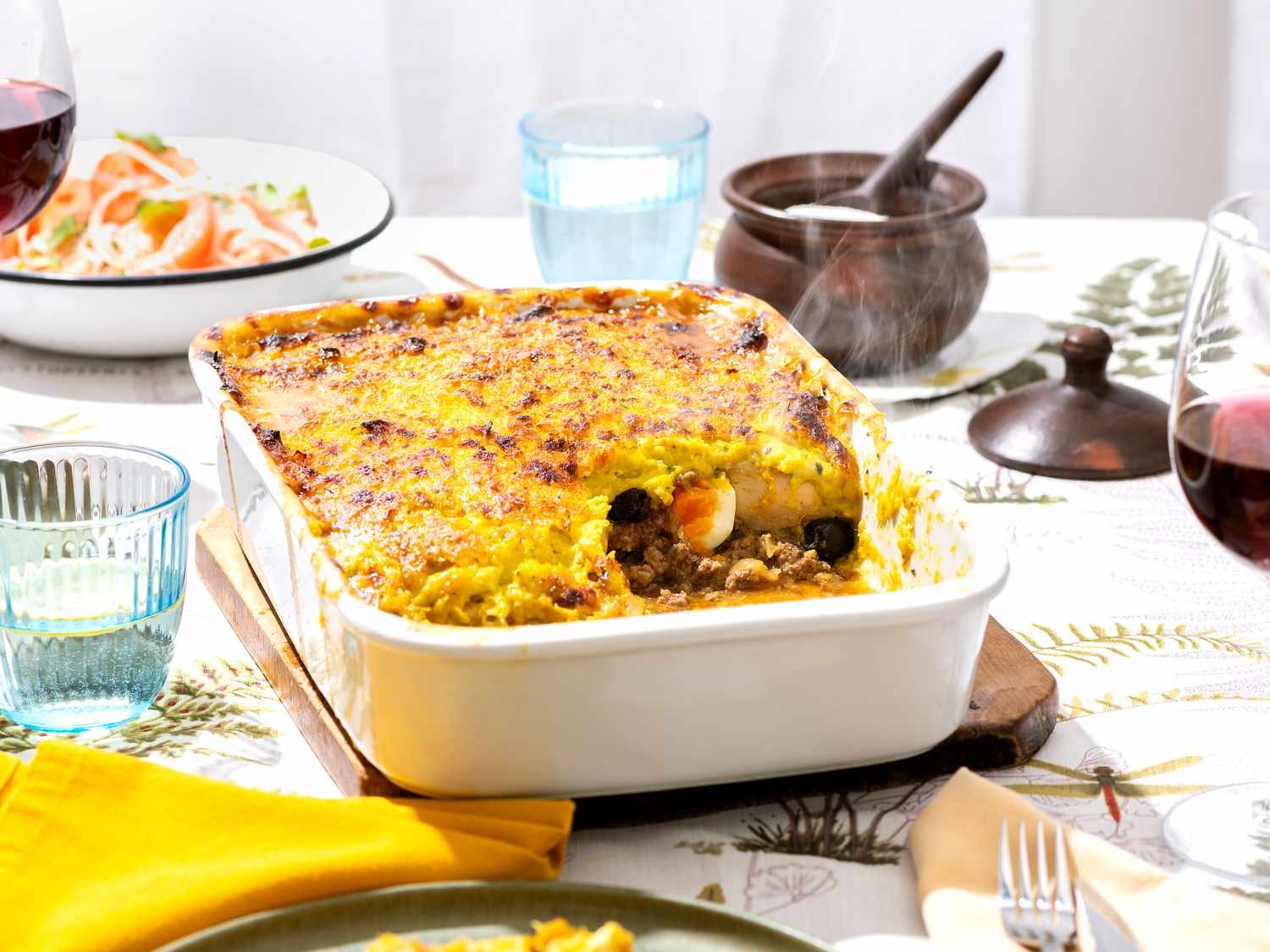
You might know pastel de choclo, the Chilean corn casserole baked in a clay pot. Tarta de choclo is its close cousin, but it takes a different form. Instead of a deep dish, this savory pie uses a pastry crust or a thick corn layer baked in a standard pie plate, making it easier to slice and serve. The filling combines a sweet corn custard with a savory pino base of ground beef, onions, olives, and hard-boiled eggs. For anyone searching for the best tarta de choclo near me, understanding its origins and what makes an authentic version can help you spot the real thing.
Why Tarta de Choclo Became a Comfort Food Staple in Chilean Homes
In Chile, tarta de choclo is not a restaurant dish first. It evolved in home kitchens over centuries, drawing from Mapuche corn preparations and Spanish meat pies. By the early 1900s, it was a regular Sunday meal in Santiago households. Today, it remains a winter favorite, often served with a simple salad or pebre sauce. Its popularity has spread to Chilean communities abroad, especially in cities like Miami and Los Angeles, where restaurants now feature it on menus. The dish’s appeal lies in its contrast: a sweet, creamy corn topping over a savory, spiced meat filling. That balance is hard to get right, which is why finding a well-made version matters.
Online reviews from 2023 and 2024 show that top-rated spots often have long wait times on weekends. This suggests that demand for authentic tarta de choclo is growing outside Chile. For the best results, check recent Google reviews or local food blogs for updated recommendations. A good sign is when a restaurant uses fresh corn, not canned, for the topping. The texture should be thick but tender, with a golden-brown crust from baking.
How to Identify an Authentic Tarta de Choclo When You Order
Start by looking at the menu description. Authentic versions list pino as the base: ground beef sautéed with onions, seasoned with cumin and black pepper. The filling should include whole olives and slices of hard-boiled egg. The corn layer is made from fresh corn kernels blended with milk or cream, sometimes with a touch of basil. If the menu mentions canned corn or a cornmeal mix, it is likely a shortcut version. Ask the server whether the corn is fresh. In Chile, traditional picadas (small eateries) often prepare it from scratch daily.
When the pie arrives, examine the top. It should be a uniform golden color, slightly puffed, with no cracks. A spoonful should hold its shape, not runny. The meat layer should be moist but not greasy. Taste the corn first: it should be sweet but not sugary, with a creamy consistency. The olives add a briny pop, and the egg gives a mild richness. If the pie is served with pebre (a Chilean salsa of chopped onion, cilantro, and chili), that is a good sign of authenticity. Avoid versions that use cheese on top—that is a modern adaptation not found in traditional recipes.
Strengths and Weaknesses of Popular Tarta de Choclo Spots
One strength of established Chilean restaurants in the US is their consistency. For example, a well-known spot in Miami’s Little Havana district has been serving tarta de choclo since 2018, and regulars praise its fresh corn and balanced seasoning. However, a common weakness is portion size: some places serve a small individual pie that leaves you wanting more. Another weakness is the use of frozen corn in off-season months, which can make the topping watery. On the positive side, many restaurants now offer gluten-free crusts or a vegetarian version with mushrooms instead of beef, catering to dietary trends.
A weaker claim is that any Chilean restaurant automatically makes a great tarta de choclo. In reality, the dish requires careful preparation. The corn must be ground to the right consistency—too coarse and it is gritty, too fine and it becomes gluey. The meat filling needs to be cooked down until almost dry, or it will make the crust soggy. The more useful approach is to read recent reviews that mention texture and flavor specifically. Look for phrases like “creamy corn” and “well-seasoned meat” rather than just “delicious.”
Lessons from a Real Incident: A 2023 Review That Changed One Restaurant’s Recipe
In early 2023, a Chilean restaurant in Los Angeles received a critical Google review that went viral in the local community. The reviewer, a Chilean expat, complained that the tarta de choclo used canned corn and lacked olives. The owner responded publicly, apologizing and promising to switch to fresh corn. Within a month, the restaurant updated its recipe and posted photos of the new version. The incident shows how important authenticity is to customers who know the dish. It also highlights the power of online reviews in shaping restaurant menus. For anyone searching for the best tarta de choclo near me, this story is a reminder to check recent feedback and look for signs that a restaurant listens to its patrons.
The restaurant’s sales reportedly increased after the change, according to local food bloggers. This case underscores that authenticity is not just about tradition—it is a business advantage. When a restaurant commits to using fresh ingredients and traditional methods, it builds trust. For the diner, that trust translates into a more satisfying meal. So before you order, scan the reviews for any mention of recipe changes or owner responses. That can tell you more than a five-star rating alone. Public records covering this story are gathered in Best Tarta de Choclo Near Me: Where to Find Authentic Corn Tart
| Element | Authentic Version | Common Shortcut |
|---|---|---|
| Corn base | Fresh corn, ground or blended | Canned corn or cornmeal mix |
| Meat filling | Ground beef, onions, cumin, black pepper | Pre-seasoned or frozen meat |
| Add-ins | Olives, hard-boiled egg | Often omitted or replaced with cheese |
| Topping | Creamy corn layer, baked golden | Runny or cracked corn layer |
Frequently Asked Questions
Is it safe to order tarta de choclo from a restaurant that uses canned corn?
Yes, it is safe to eat, but the texture and flavor will differ from the traditional version. Canned corn often has a softer, less sweet taste and may release more water during baking, making the topping less firm. For the best experience, look for restaurants that specify fresh corn on their menu.
When did tarta de choclo first appear in Chilean cuisine?
The dish evolved over centuries, with roots in Mapuche corn dishes and Spanish meat pies. By the late 19th century, it was a common home-cooked meal in central Chile. No single inventor is credited; it developed organically in family kitchens.
How can I find a restaurant that serves authentic tarta de choclo near me?
Use Google Maps or Yelp and search for “Chilean restaurant” or “tarta de choclo.” Read recent reviews and look for mentions of fresh corn, pino filling, and olives. Check the restaurant’s photos to see if the pie has a golden, puffed top. Calling ahead to ask about ingredients can also help.
How does tarta de choclo differ from pastel de choclo?
Both share the same corn and meat filling, but pastel de choclo is traditionally baked in a deep clay cazuela and often has a thicker corn layer. Tarta de choclo is baked in a pie dish, sometimes with a pastry crust, and is easier to slice. The flavors are very similar.
How many calories are in a typical serving of tarta de choclo?
A standard individual serving (about 200 grams) contains roughly 350 to 450 calories, depending on the amount of beef, oil, and eggs used. The corn topping adds natural sugars and fat from milk or cream. For exact numbers, ask the restaurant for nutritional information.